HealthSync AI

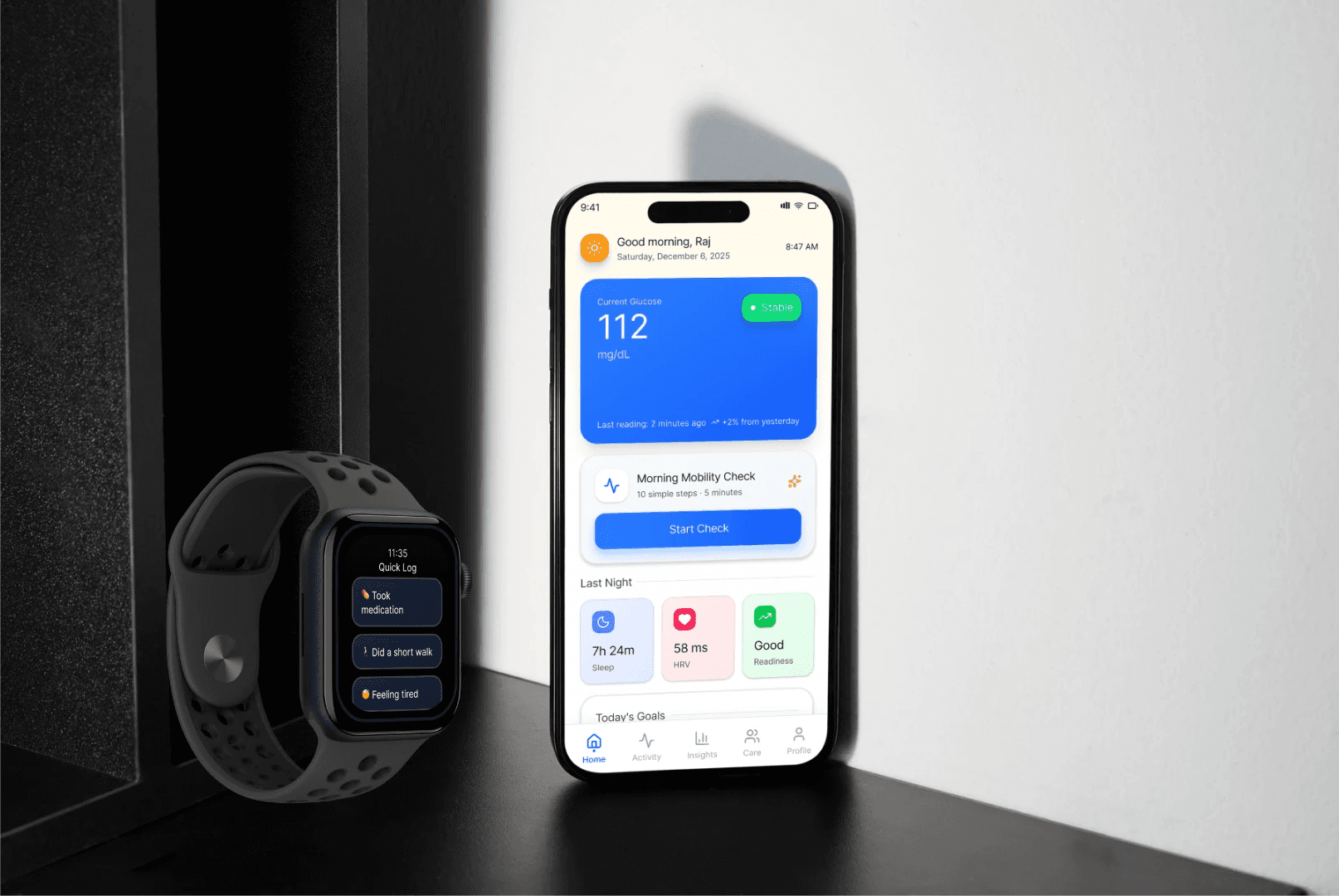
HealthSync AI is an MVP-stage, AI-enabled wearable and mobile application designed to support Hospital-at-Home (HaH) care models by integrating real-time lifestyle data with medical context.

Aug 5, 2025
Company

ISM Creative

Company

ISM Creative

Company

ISM Creative

Role

UX Designer

Role

UX Designer

Role

UX Designer

Service

Product Design

Service

Product Design

Service

Product Design

Overview

Overview

Overview


The product aims to reduce fragmentation in personal healthcare data while enabling patients, caregivers, and healthcare providers to coordinate care more effectively outside traditional clinical settings.

Problem

Healthcare data is fragmented. Patients generate large amounts of lifestyle data through wearables and health apps, while clinicians rely on EMRs that capture only clinical encounters. These two data ecosystems rarely connect, limiting preventive care, reducing clinician efficiency, and weakening patient‑doctor collaboration.

Existing solutions tend to focus on either:

  • Wellness tracking, with little clinical relevance, or

  • Clinical record systems, which exclude day‑to‑day lifestyle context

My Responsibilities

This project was conducted by a group of designer, researcher, and product manager at ISM Creative Company. My responsibilities as the designer of this project was:

  • Interpreting and synthesizing existing market and user research into UX insights

  • Translating research findings into product requirements and experience principles

  • Designing end-to-end user experiences for Patient Mode

  • Defining information architecture, user flows, and interaction patterns

  • Ensuring accessibility, clarity, and trust in a health-tech context

  • Collaborating with stakeholders to align design decisions with business, technical, and regulatory constraints


The product aims to reduce fragmentation in personal healthcare data while enabling patients, caregivers, and healthcare providers to coordinate care more effectively outside traditional clinical settings.

Problem

Healthcare data is fragmented. Patients generate large amounts of lifestyle data through wearables and health apps, while clinicians rely on EMRs that capture only clinical encounters. These two data ecosystems rarely connect, limiting preventive care, reducing clinician efficiency, and weakening patient‑doctor collaboration.

Existing solutions tend to focus on either:

  • Wellness tracking, with little clinical relevance, or

  • Clinical record systems, which exclude day‑to‑day lifestyle context

My Responsibilities

This project was conducted by a group of designer, researcher, and product manager at ISM Creative Company. My responsibilities as the designer of this project was:

  • Interpreting and synthesizing existing market and user research into UX insights

  • Translating research findings into product requirements and experience principles

  • Designing end-to-end user experiences for Patient Mode

  • Defining information architecture, user flows, and interaction patterns

  • Ensuring accessibility, clarity, and trust in a health-tech context

  • Collaborating with stakeholders to align design decisions with business, technical, and regulatory constraints


The product aims to reduce fragmentation in personal healthcare data while enabling patients, caregivers, and healthcare providers to coordinate care more effectively outside traditional clinical settings.

Problem

Healthcare data is fragmented. Patients generate large amounts of lifestyle data through wearables and health apps, while clinicians rely on EMRs that capture only clinical encounters. These two data ecosystems rarely connect, limiting preventive care, reducing clinician efficiency, and weakening patient‑doctor collaboration.

Existing solutions tend to focus on either:

  • Wellness tracking, with little clinical relevance, or

  • Clinical record systems, which exclude day‑to‑day lifestyle context

My Responsibilities

This project was conducted by a group of designer, researcher, and product manager at ISM Creative Company. My responsibilities as the designer of this project was:

  • Interpreting and synthesizing existing market and user research into UX insights

  • Translating research findings into product requirements and experience principles

  • Designing end-to-end user experiences for Patient Mode

  • Defining information architecture, user flows, and interaction patterns

  • Ensuring accessibility, clarity, and trust in a health-tech context

  • Collaborating with stakeholders to align design decisions with business, technical, and regulatory constraints

Design Process

Design Process

Design Process

Research Foundation

This project was grounded in secondary and market research. As the designer, my role was to interpret, synthesize, and translate these findings into UX decisions.

Key research inputs included:

  • National healthcare and wearable adoption statistics

  • Industry reports on digital health, AI adoption, and preventive care

  • Market analysis identifying gaps between consumer health apps and clinical systems

The research consistently highlighted:

  • High adoption of wearables and mobile health apps

  • Widespread EMR usage among clinicians without lifestyle data integration

  • Growing demand for preventive and hospital‑at‑home care, driven by an aging population

  • Strong openness to AI‑assisted health insights when trust and transparency are ensured

Insight Synthesis

From the research, several UX‑relevant insights have been distilled:

  • Data without context is not actionable: Raw metrics overwhelm both patients and clinicians without interpretation.

  • Trust is a prerequisite for adoption: Users need clear visibility into how their data is used, shared, and protected.

  • Clinician time is scarce: Doctor‑facing experiences must prioritize clarity, summarization, and speed.

  • AI must be explainable: Users are willing to accept AI recommendations when the reasoning is visible.

  • Accessibility is essential, not optional: Preventive care tools must support aging users through readable, low‑cognitive‑load interfaces.

User Journey Design

The HealthSync AI experience was designed as a continuous, end‑to‑end care loop that supports patients from hospital discharge through long‑term monitoring. Rather than isolated features, the system connects daily routines, AI‑supported guidance, human caregiving, and clinical escalation into a cohesive flow that prioritizes prevention, clarity, and timely intervention.

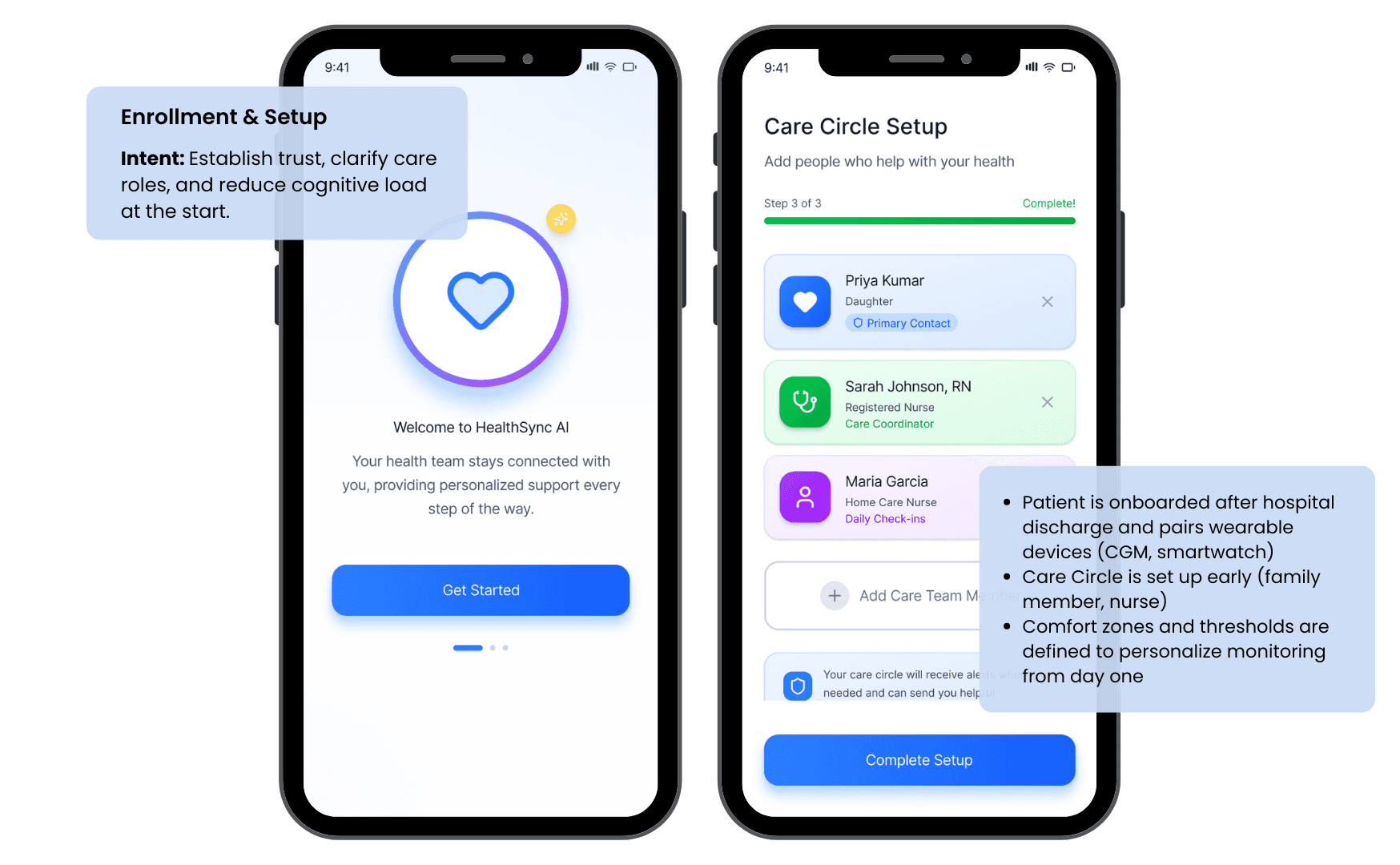
Patients begin by onboarding after discharge, pairing their wearable devices and setting personalized thresholds while defining a care circle that may include caregivers or nurses.
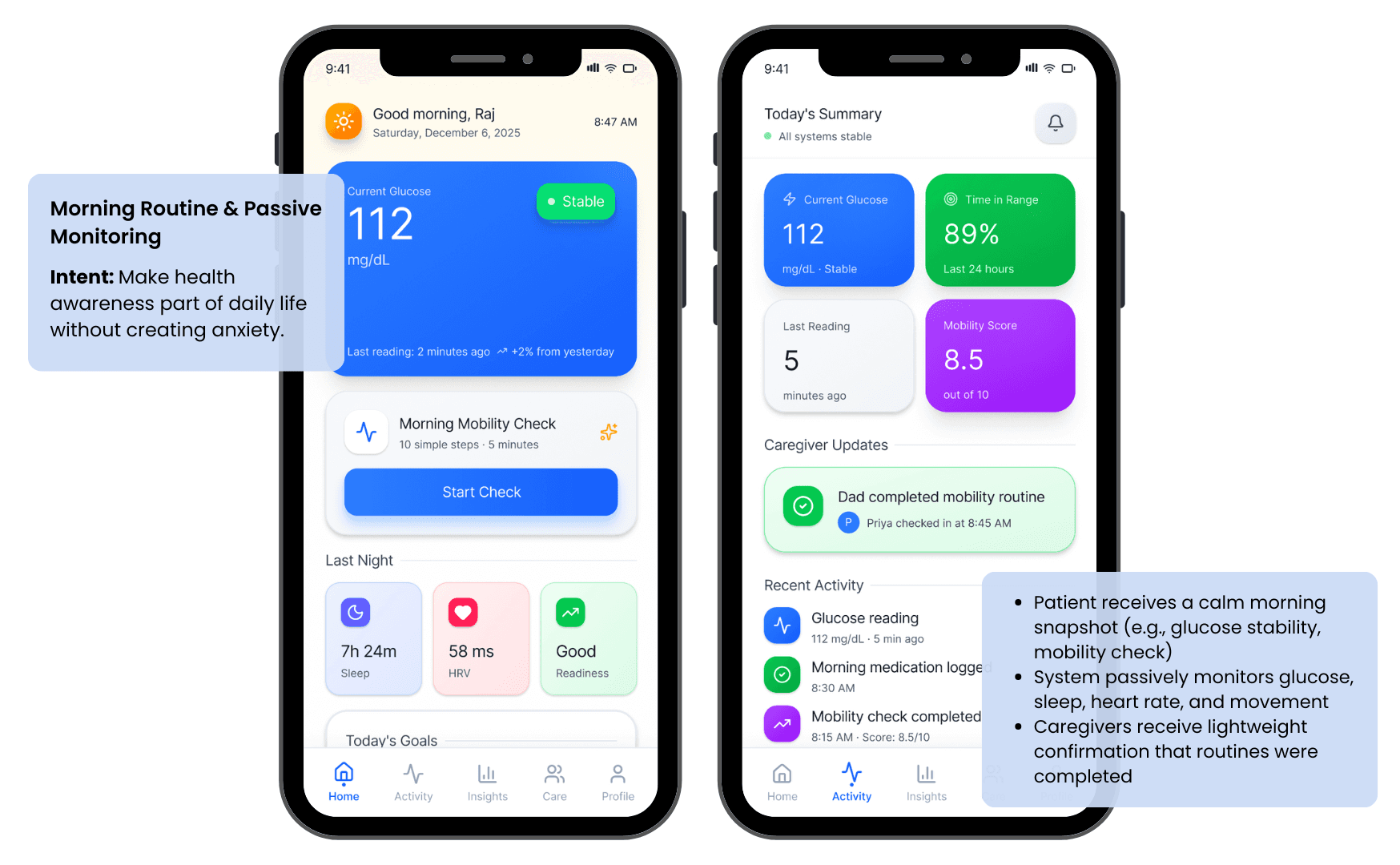
Once integrated into daily life, the platform emphasizes calm, passive monitoring through high‑level health snapshots instead of overwhelming raw data, providing reassurance to both patients and caregivers.
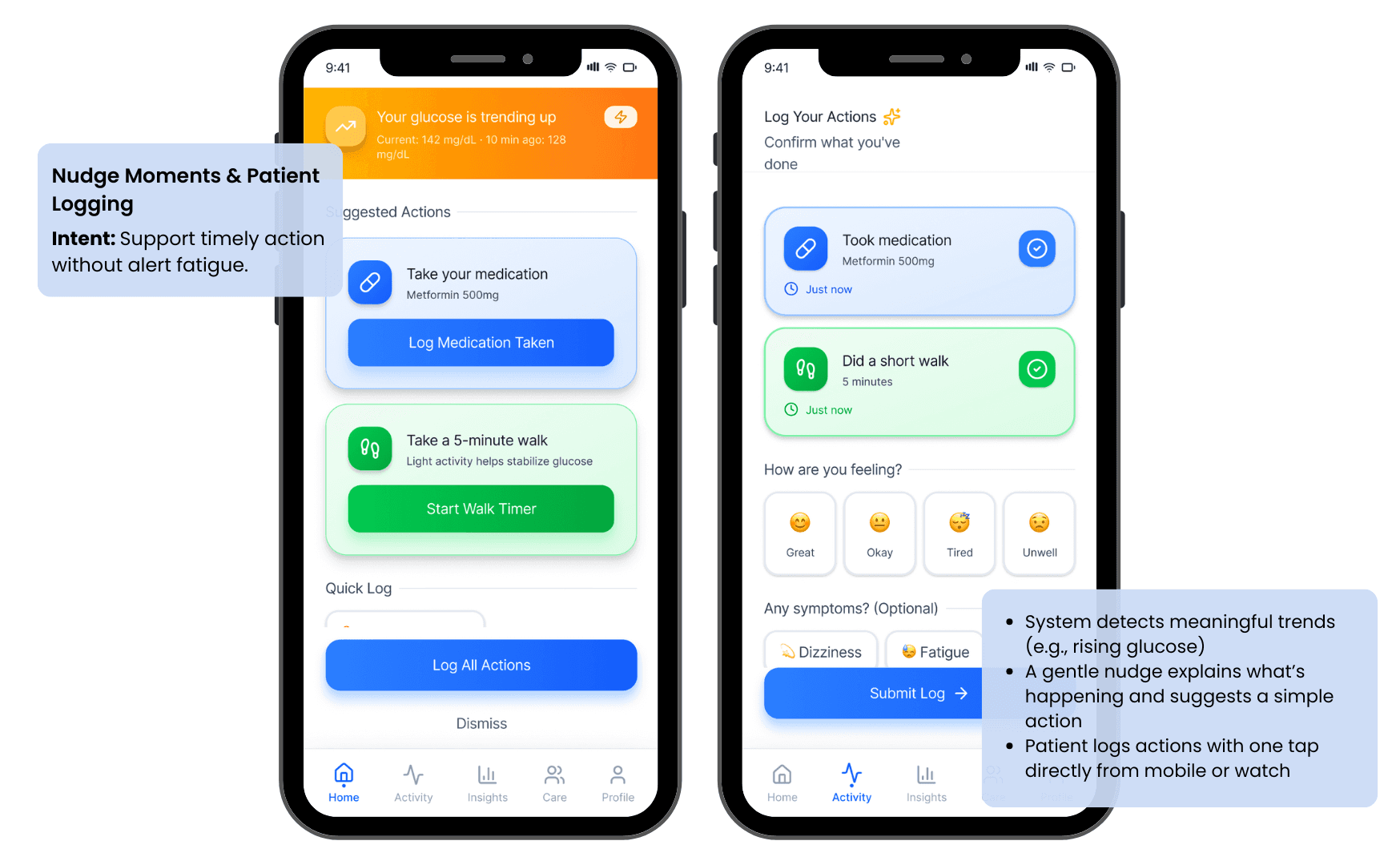
When meaningful changes occur, the system introduces gentle, explainable nudges that guide action without creating alert fatigue. Human support is layered in through coordinated caregiver interactions, supported by concise summaries that keep everyone aligned.
In higher‑risk situations, the experience escalates smoothly to clinical staff with full context, framing intervention as supportive rather than punitive.
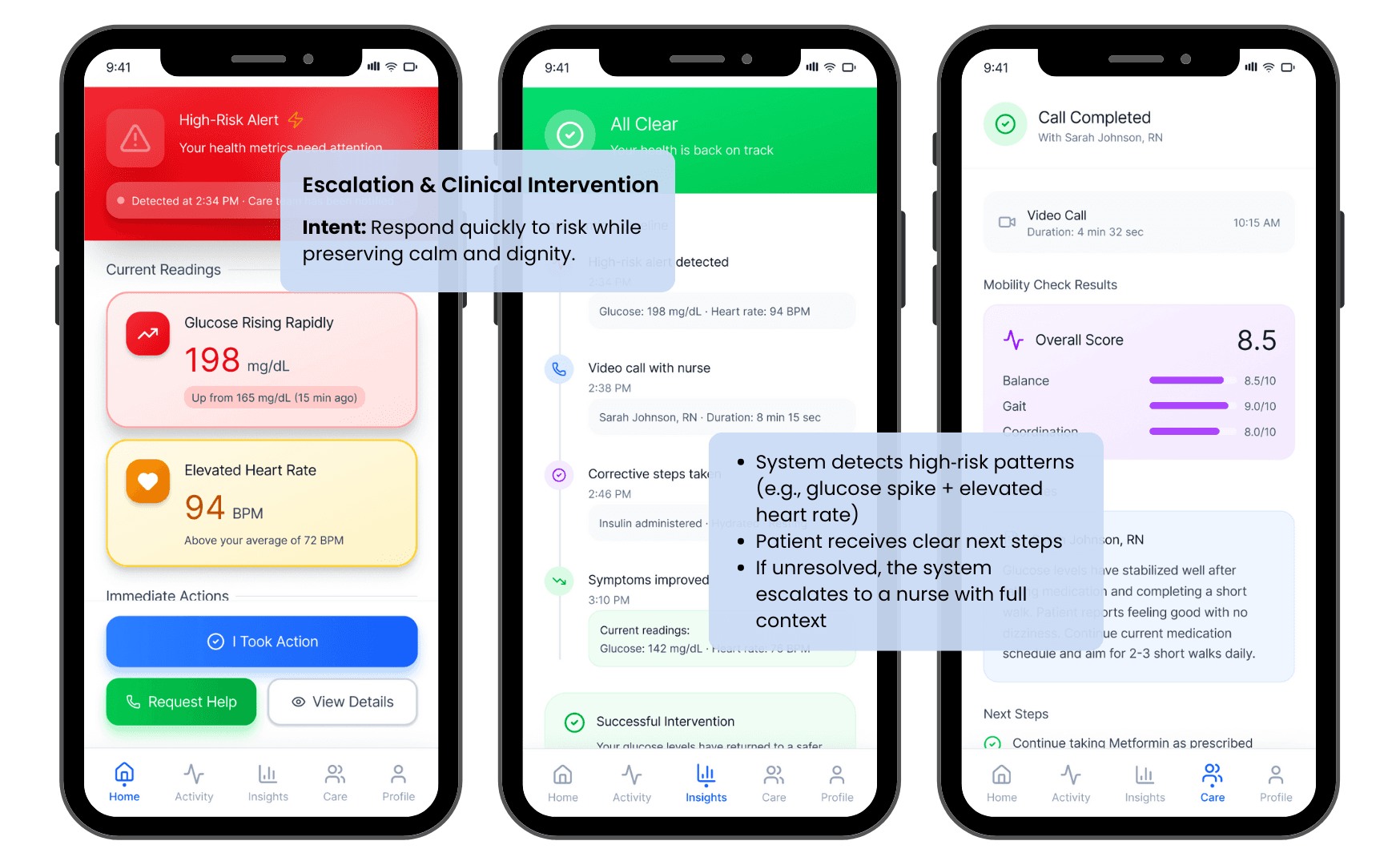
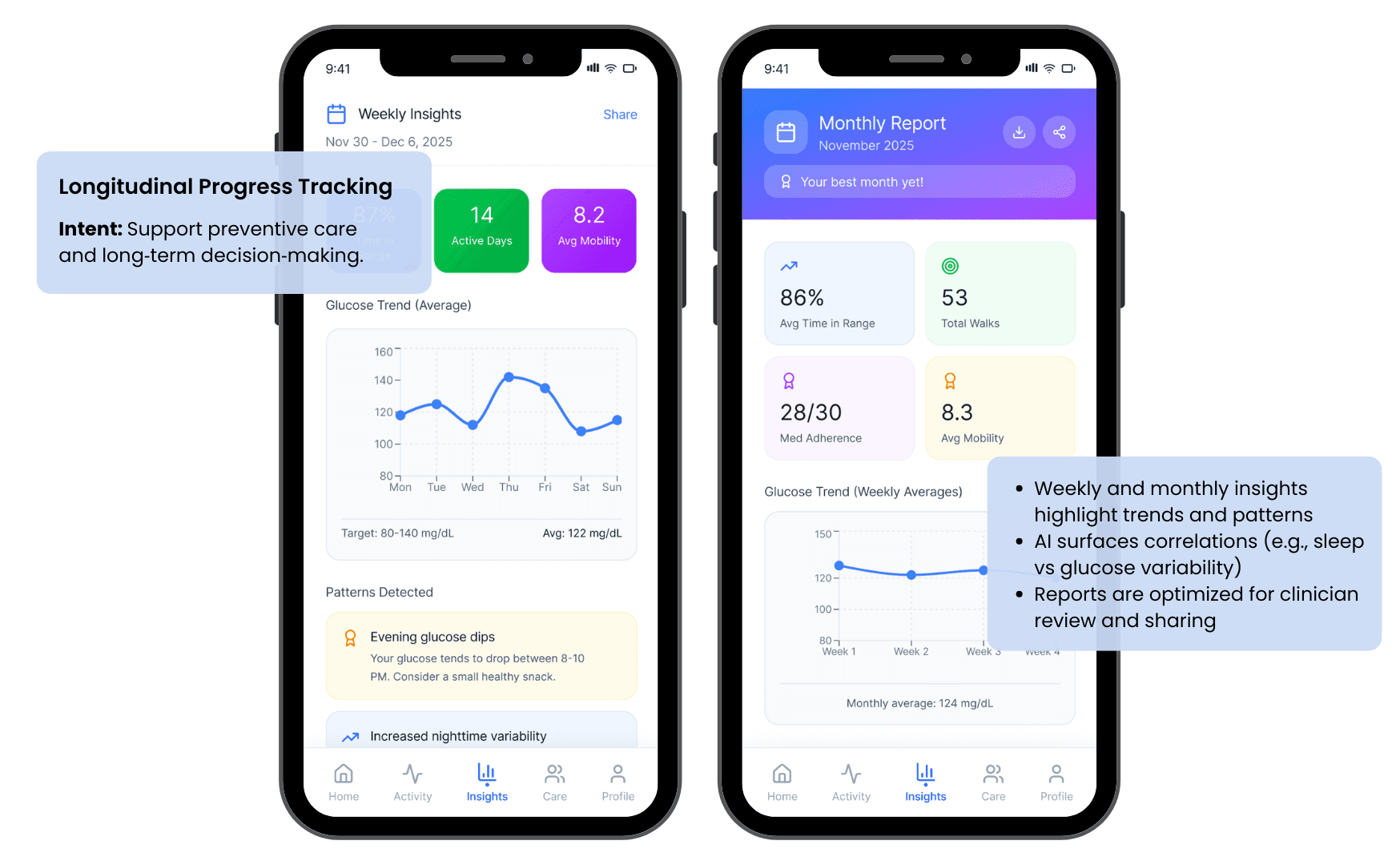
Over time, reflective check‑ins and longitudinal summaries surface trends and progress, enabling proactive care planning instead of reactive treatment.
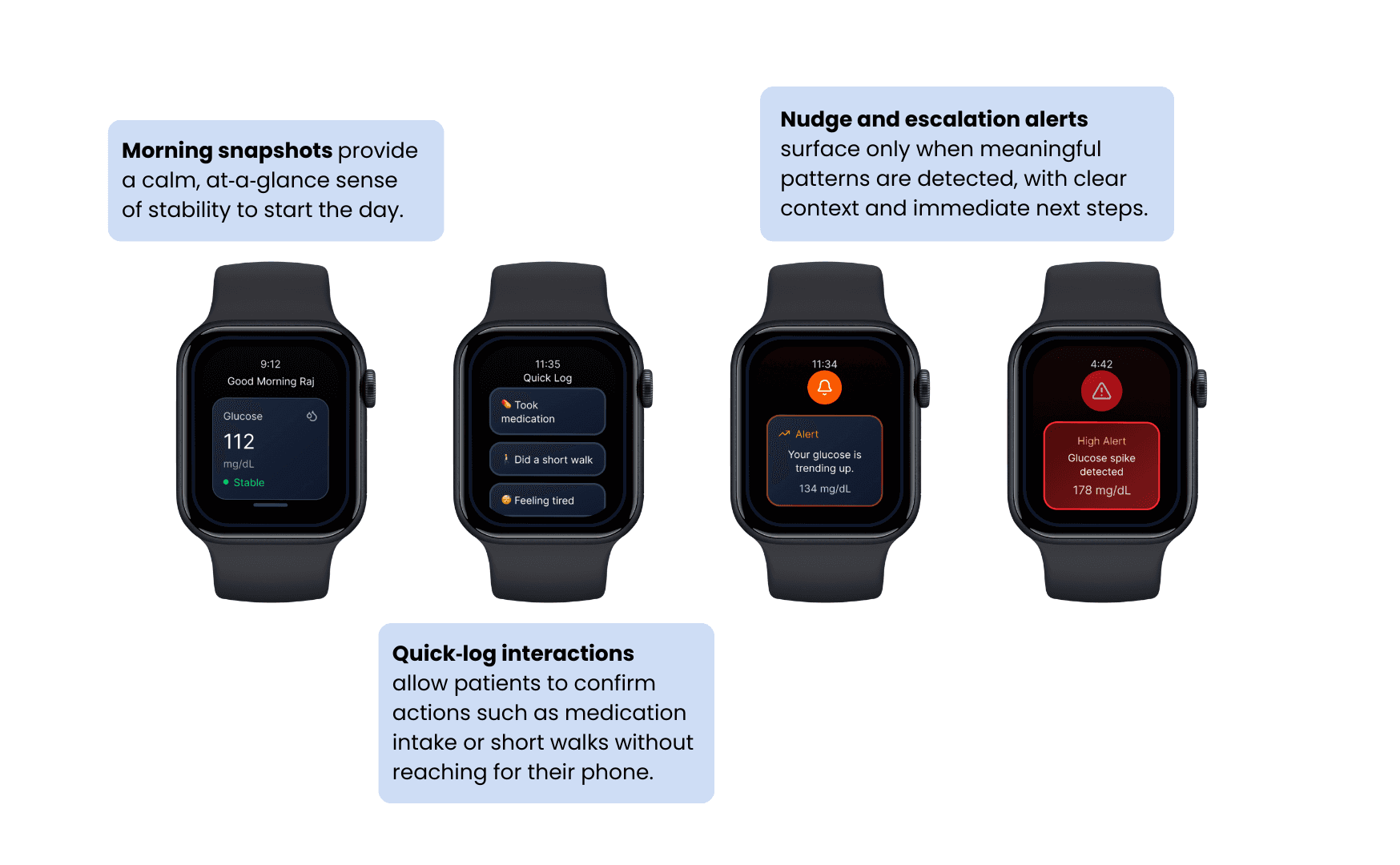
In addition to the mobile app, I designed a set of Apple Watch interfaces to support critical moments where immediacy and low friction were essential. The watch experience was intentionally minimal, glanceable, and action‑oriented, extending the core product logic without duplicating the full mobile interface.

The Apple Watch was used for the morning health snapshot, nudge moments, quick action logging, escalation alerts, caregiver or clinician calls, and end‑of‑day reflection. These screens prioritize high‑contrast visuals, short text, and single‑tap actions to reduce cognitive load during moments of vulnerability or urgency.
Accessibility & Scalability Considerations

Given the long‑term vision of hospital‑at‑home care:

  • Interfaces were designed with scalable typography and clear visual hierarchy

  • Interaction patterns avoided unnecessary complexity

  • The design anticipated future expansion of data sources and AI capabilities without overwhelming users

Outcome

The resulting MVP design demonstrated how research‑driven UX could bridge the gap between wellness tracking and clinical care. HealthSync AI positioned itself as a collaborative tool, supporting patients in understanding their health and clinicians in making faster, more informed decisions.
Create a free website with Framer, the website builder loved by startups, designers and agencies.